 The Castle of Almourol
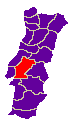
Portugal, Santarem district, Vila Nova de Barquinha conurbation, village of Praia do Ribatejo, on the Rio Tejo (Tagus River), approximately 25 km south of Tomar.
The Castle of AlmourolPortugal, Santarem district, Vila Nova de Barquinha conurbation, village of Praia do Ribatejo, on the Rio Tejo (Tagus River), approximately 25 km south of Tomar.
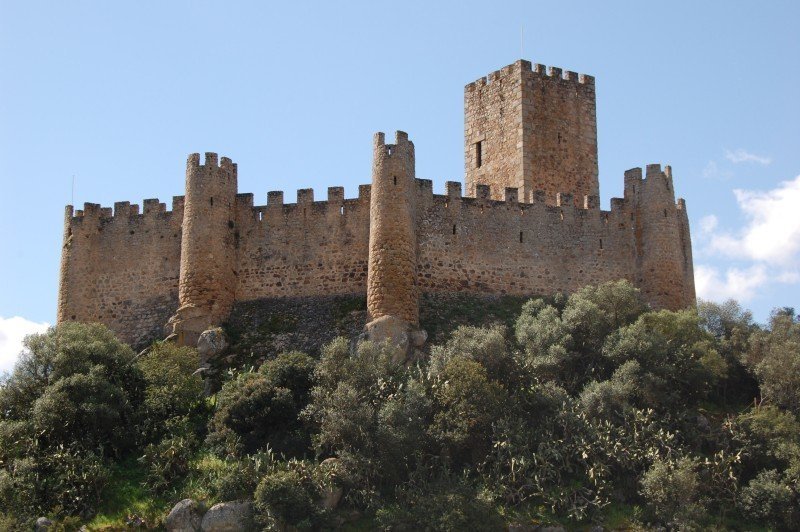
Almourol Castle is built on a granite outcrop at the top of a small island measuring 310 metres long by 75 metres wide in the middle of the Rio Tejo (Tagus River).
Historians believe that a Lusitanian fortress originally stood on this site, which was conquered and improved by the Roman army and then occupied successively by the Visigoths, the Alans and finally the Moors in the 8th century, until it was conquered by the armies of the first king of Portugal, Afonso Henriques, known as Afonso the Conqueror.
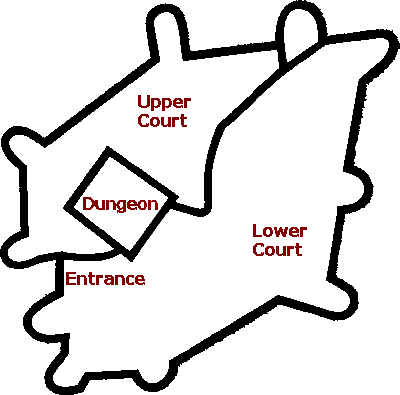
This fortress, like others located near the River Tagus, was entrusted to Gualdim Païs, Master of the Order of the Temple in Portugal, who undertook to rebuild the citadel in order to protect the southern border of the kingdom. He completed the reconstruction of the fortress in 1171, two years after the construction of the citadel of Tomar.
At that time, Almourol was the centrepiece of Portugal's defensive system along the Tagus River, which served as a natural border between the Christian part of the country and the part still in Muslim hands.
Heavily damaged during an earthquake in 1755(1), the castle was rebuilt in the 19th century in the romantic style of the period. It was declared a national monument in 1919.

(1)It was an earthquake that history has remembered as the Lisbon earthquake. Based on the writings of witnesses at the time, modern scientists have estimated that the magnitude of this earthquake was between 8.5 and 9, making it one of the most powerful earthquakes Europe has ever experienced. This earthquake and the tsunami that followed, with sources reporting waves around ten metres high in Lisbon, undoubtedly caused the deaths of more than 100,000 people and destroyed almost 90% of the buildings in the Portuguese capital, not to mention the destruction in other towns and villages. In Morocco, this natural disaster also wreaked havoc, partially destroying the cities of Tangier, Rabat, Salé, Essaouira, Agadir, and others, and causing the deaths of tens of thousands of people. Modern scientists even believe that the tsunami may have reached the other side of the Atlantic, with waves nearly two metres high in Martinique and Barbados.

Templiers.org - Christophe Staf
All Rights Reserved
Member of the Templars Heritage Route - Route du Patrimoine Templier