 The Commandery of Antvorskov
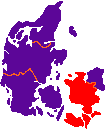
Denmark, Sjælland region, approximately 20 km northeast of Korsør, town of Slagelse.
The Commandery of AntvorskovDenmark, Sjælland region, approximately 20 km northeast of Korsør, town of Slagelse.
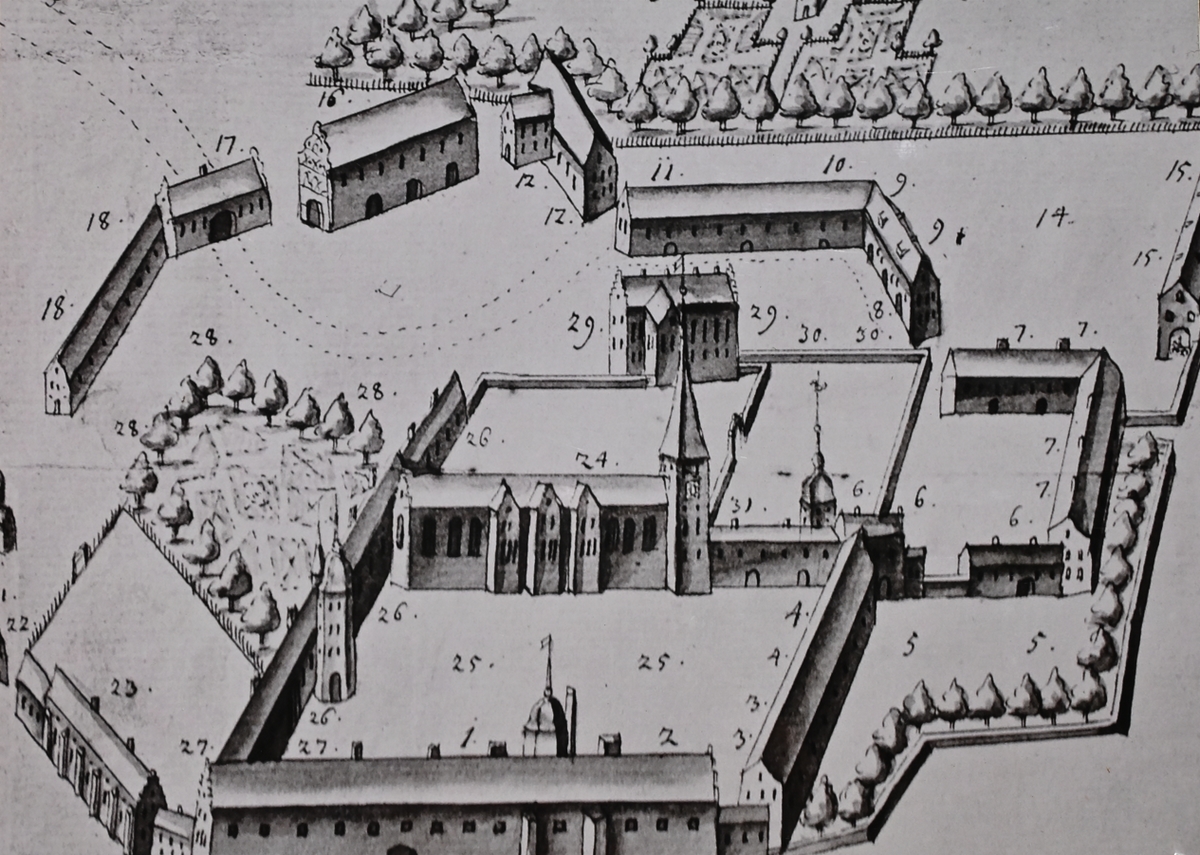
In 1165, Valdemar I, King of Denmark, gave the Order of Saint John of Jerusalem a large estate in Antvorskov.
Shortly afterwards, the Order built a large commandery there, which became its main residence in Denmark.
Its expansion was aided by large donations from all the local lords. Its influence in Danish political life was such that the prior of the commandery was often called upon to sit on the Council of the Kingdom.
In the 13th and 14th centuries, the commandery became one of the most important landowners after the Danish crown.
At the beginning of the 16th century, the Lutheran Reformation was imposed on the country after a three-year civil (1). From that moment on, the commandery, which resembled an imposing monastery, was seized by King Christian III(2), who transformed it into a royal castle.
In the 18th century, the castle became a barracks for the Danish army, and at the beginning of the 19th century, it was abandoned, fell into ruin and was finally destroyed in 1816.
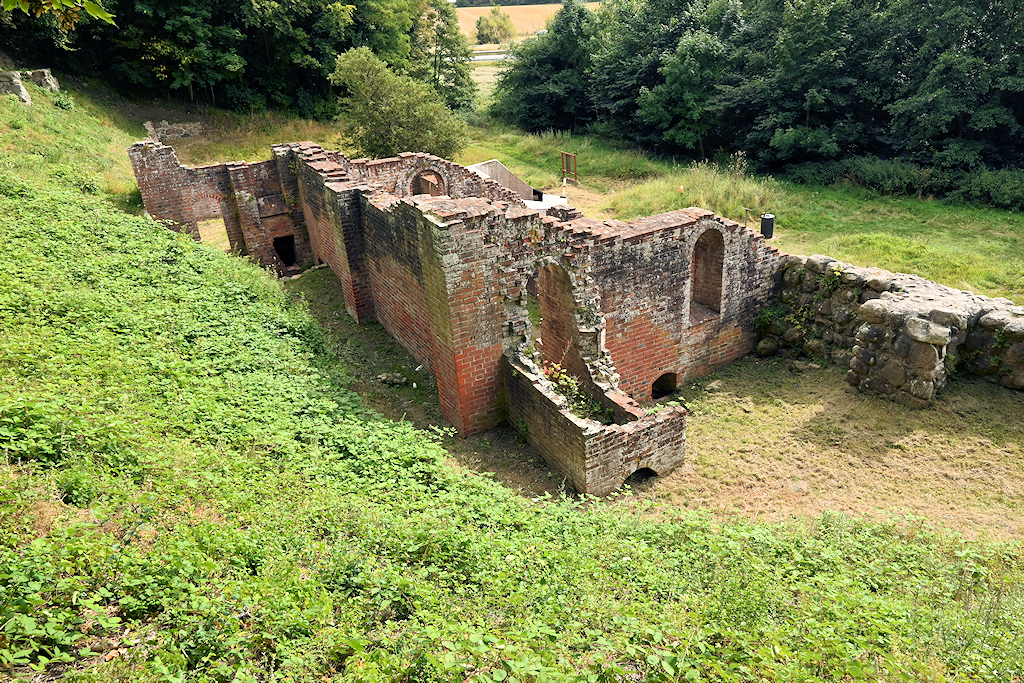
Today, only a few ruins of the outbuildings remain, which have been identified as a bakery or kitchen and a warehouse. Archaeological work is underway to restore these ruins, preserve them and showcase them.
(1)This civil war, also known as "The Earl's War" (or Grevens Fejde in Danish), took place between 1534 and 1536. This war pitted Count Christopher of Oldenburg and his allies against King Christian III of Denmark in the struggle for succession to the throne of King Frederick I of Denmark, who died in 1533. Upon the king's death, part of the Danish nobility, led by the Count of Oldenburg, rebelled not only against Christian III's accession to the throne but also against the spread of the Lutheran Reformation in the kingdom. In 1536, after several defeats, Christopher of Oldenburg surrendered and returned to his county.
(2)Christian III was King of Denmark and Norway from 1534 until his death in 1559. He was also Duke of Holstein and Schleswig from 1533 to 1544. He was born on 12 August 1503. He was the son of King Frederick I of Denmark and Anne of Brandenburg, daughter of John I Cicero, Elector of Brandenburg. On 29 October 1525, he married Dorothea of Saxe-Lauenburg, daughter of Duke Magnus I of Saxe-Lauenburg, with whom he had five children, including the future King Frederick II of Denmark.


Templiers.org - Christophe Staf
All Rights Reserved
Member of the Templars Heritage Route - Route du Patrimoine Templier